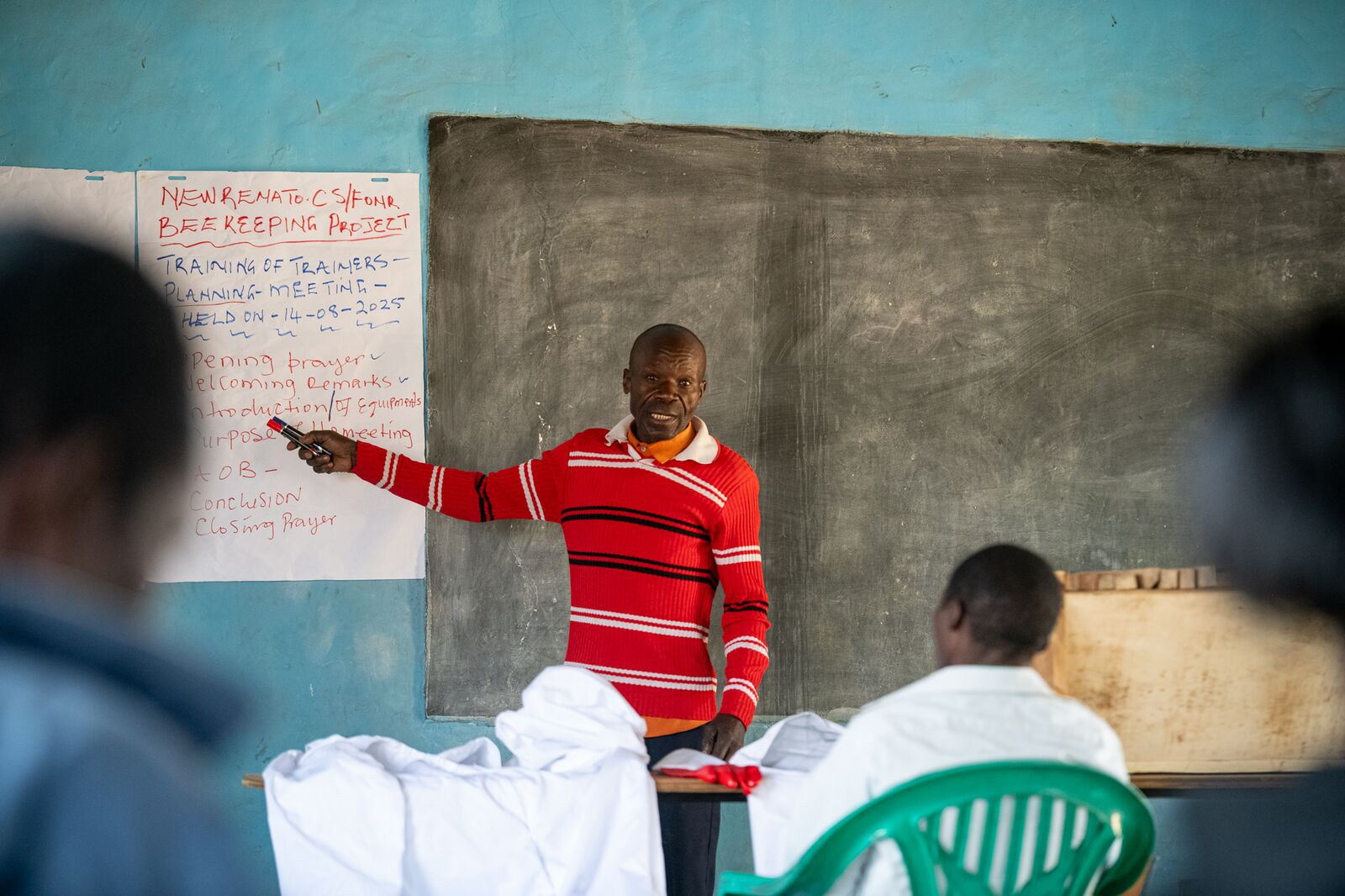
Beekeeping has been one of the long-standing livelihood activities of New Renato Community Society (NRCS), led by Mr. Thomas Kafula. Over the years, the initiative has given community members beekeeping knowledge and skills, promoting sustainable income, environmental conservation and better household livelihoods. With support from partners, the project has expanded with modern beehives, protective equipment, and honey production and marketing.
Beekeeping as a pilot project
As part of our agriculture pillar, NRCS has developed beekeeping as a pilot project to promote sustainable livelihoods and improve income opportunities for local farmers. The project teaches modern beekeeping, honey production, harvesting and hive management.
More than 1,000 local farmers have been trained in beekeeping, enabling them to diversify their farming and earn additional income from honey and other bee products. Beekeeping also contributes to food security, environmental conservation and the pollination of crops.

Keep the bees, so that even when you grow very old, they will still work for you.
Thomas C. Kafula, beekeeping trainer

Honey production and processing
NRCS supports the collection and processing of raw honey into a cleaner, higher-value product. The honey is filtered and processed before being packaged for consumers. Proper processing and packaging maintain the natural quality of honey while improving its presentation and market value.
Honey production gives farmers an additional income and creates opportunities along the value chain, including collection, processing, packaging, transport, marketing and sales. Through the honey project, NRCS aims to build a sustainable honey value chain that benefits local farmers and promotes self-reliance.

Leave a Reply